Check Your Loan‑to‑Value (LTV) in Seconds
If you’re planning to buy a home, remortgage, or invest in property, one of the first things lenders will look at is your loan-to-value ratio (LTV). Our free UK LTV calculator makes it easy to work out your LTV instantly, so you know where you stand before applying for a mortgage.
Knowing your LTV is important because it directly affects the mortgage products you qualify for, the interest rate you’ll pay, and even the maximum amount you can borrow.
What is Loan-To-Value (LTV)?

Loan-to-value, often shortened to LTV, is a percentage figure that compares the size of your mortgage against the value of the property. It shows how much of the purchase is funded by borrowing, and how much comes from your deposit or equity.
For example, if you’re buying a house worth £250,000 with a £25,000 deposit, you would need a mortgage of £225,000. That works out as a 90% LTV, because you are borrowing 90% of the property’s value. If you had a larger deposit of £75,000, your mortgage would only be £175,000 — giving you a much healthier LTV of 70%.
Lenders use this percentage to judge risk. A lower LTV makes you less risky as a borrower, while a higher LTV increases their risk and typically results in higher interest rates.
How to Calculate Your LTV Ratio?
Calculating your loan-to-value ratio is straightforward:
LTV % = (Mortgage Amount ÷ Property Value) × 100
Example:
- Property value: £250,000
- Deposit: £50,000
- Mortgage needed: £200,000
- Calculation: £200,000 ÷ £250,000 × 100 = 80% LTV
If your deposit was only £25,000, the mortgage would be £225,000, giving you a 90% LTV.
This simple percentage makes a big difference — a smaller deposit pushes you into a higher LTV bracket, which usually means higher rates and stricter lending requirements.

| Property Value | Deposit Size | Mortgage Needed | Loan-to-Value (LTV) |
|---|---|---|---|
| £200,000 | £10,000 (5%) | £190,000 | 95% LTV |
| £200,000 | £20,000 (10%) | £180,000 | 90% LTV |
| £200,000 | £40,000 (20%) | £160,000 | 80% LTV |
| £200,000 | £60,000 (30%) | £140,000 | 70% LTV |
| £200,000 | £80,000 (40%) | £120,000 | 60% LTV |
Why LTV Matters?
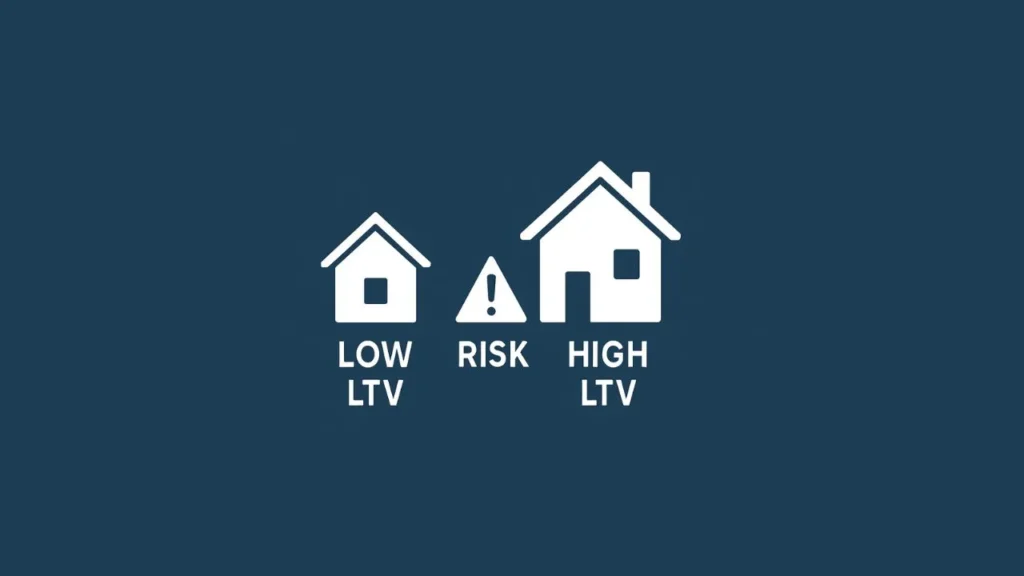
Your LTV is not just a number; it’s one of the biggest factors in how lenders price your mortgage. In practice, the lower your LTV, the more attractive you are to lenders, and the more options you’ll have.
- Low LTV (e.g. 60–75%): Lenders compete for your business with lower interest rates, flexible terms, and a wide range of products. You’ll generally save thousands over the life of the mortgage.
- High LTV (e.g. 90–95%): Fewer lenders are willing to take you on, and those that do will usually charge higher rates. You’ll also face stricter affordability checks, and you run a greater risk of negative equity if house prices fall.
It’s worth noting that your LTV doesn’t stay the same forever. As you make repayments and your mortgage balance decreases, your LTV improves. If your property’s value rises, your LTV falls even faster. That’s why homeowners often find they qualify for cheaper remortgage deals a few years into their loan.
What Is a Good LTV Ratio?
The quest for a good LTV (loan-to-value) ratio sits at the heart of mortgage affordability. Lenders view this percentage as a direct measure of risk, making it essential to understand where your application stands.
LTV brackets: 60%, 75%, 80%, 90%, 95%

Most mortgage lenders structure their offerings around specific LTV brackets, typically at 5% intervals between 60% and 95%. These brackets serve as critical thresholds that determine your mortgage options:
- 60% LTV or lower – Considered excellent, opening access to the most competitive rates. Deals don’t typically improve beyond this point, even at 40% or 20% LTV.
- 75% LTV – Very good position, still qualifying for preferential interest rates.
- 80% LTV – Generally considered good; most lenders view anything below 80% as a favorable ratio.
- 90% LTV – Higher risk category with fewer options and increased costs.
- 95% LTV – Maximum typically available without special guarantor arrangements; most expensive tier.
How Equity Affects Your LTV Over Time?
Your LTV ratio isn’t a static figure—it evolves throughout your homeownership journey as equity builds or diminishes over time. Understanding how equity affects your LTV is crucial for making informed financial decisions about your property.

Home equity vs Mortgage balance
Home equity represents the portion of your property that you own outright, free from mortgage debt. In simple terms, it’s the difference between your home’s current market value and your outstanding mortgage balance. Initially, equity comes from your deposit when purchasing a property. As you make regular mortgage payments, more of the principal gets paid off, thus increasing your equity.
To calculate your equity: Home Value – Mortgage Balance = Home Equity
For instance, if your home is worth £277,956 with a remaining mortgage of £119,124, your equity would be £158,832. This equity directly impacts your LTV ratio—as equity increases, LTV decreases. Indeed, your LTV ratio will naturally decrease over time through two mechanisms: paying down your loan and potential property value appreciation.
Negative equity and its impact on LTV
Negative equity occurs when your property’s value falls below what you still owe on your mortgage. This troubling situation typically arises when property values decline after purchasing with a high LTV mortgage.
For example, if you buy a £200,000 property with a 90% LTV (£180,000 mortgage) and the value later drops to £150,000, you’d owe £30,000 more than the property is worth. This creates significant problems when attempting to sell or remortgage.
Homeowners with smaller deposits face greater negative equity risks. Furthermore, being in negative equity can prevent you from accessing new mortgage deals, potentially forcing you to remain on higher standard variable rates.
How home improvements can increase equity?
One effective strategy to build equity is through strategic home improvements. Certain upgrades can substantially increase your property’s value, subsequently lowering your LTV ratio. Thoughtfully planned renovations can add significant value:
- Adding an extra double bedroom or loft conversion: approximately 10% increase (£30,000 on a £300,000 home)
- Installing an additional bathroom: roughly 5% increase (£15,000)
- Modernizing the kitchen: about 6% increase (£18,000)
- Adding a conservatory: around 5% increase (£15,000)
These value-adding improvements create a positive cycle—as your property value rises, your LTV ratio falls, potentially qualifying you for better mortgage rates. Throughout your homeownership, regularly using an LTV calculator helps track how your improving equity position affects your mortgage options.
Remember that not all home improvements add equal value. Consulting property professionals before investing in major renovations can help ensure your efforts truly enhance your equity position.
Borrowing Power Checker
Check Your Borrowing Power
Knowing your LTV can also give you a clear picture of your borrowing power. Each lender has their own limits on the maximum LTV they are prepared to offer. If a bank says they lend up to 90% LTV, that means you’ll need at least a 10% deposit.
Let’s say you’ve saved £20,000 for a deposit and the maximum LTV available to you is 90%. That deposit would allow you to buy a property worth up to £200,000, since £20,000 is exactly 10% of that price. If you were hoping to buy somewhere more expensive, you’d either need to save a bigger deposit or look for a lower-value property.
This is why LTV is closely tied to affordability. By adjusting the property price and deposit in our calculator, you can see instantly how much you might be able to borrow and which price ranges are realistic.
LTV Requirements by Mortgage Type

| Mortgage Type | Typical Maximum LTV | Minimum Deposit Required |
|---|---|---|
| Residential (standard) | 90–95% | 5–10% |
| Buy-to-Let | 75% (sometimes 80%) | 20–25% |
| Commercial | 65–75% | 25–35% |
| Mixed-Use / Semi-Commercial | 70–75% | 25–30% |
Residential buyers may borrow up to 95% with certain schemes, while landlords and businesses usually need much larger deposits.
Risks of High LTV Mortgages

High LTV mortgages play an important role, especially for first-time buyers who may not have had the chance to save a large deposit. However, they do come with risks.
Firstly, the interest rates are higher, so you’ll pay more each month and over the lifetime of the loan. Secondly, you’ll have fewer lenders to choose from, which means less flexibility. But perhaps the biggest risk is negative equity. If you borrow 95% of a property’s value and house prices fall by just 10%, your mortgage could be larger than the property is worth. That can make it very difficult to move house or remortgage.
High LTV mortgages can be a stepping stone onto the property ladder, but they should be approached with care and a clear understanding of the trade-offs.
Ways to Improve Your LTV Before Applying
Improving your LTV ratio before mortgage application can secure you better rates and terms. Here are practical strategies to enhance your borrowing position:
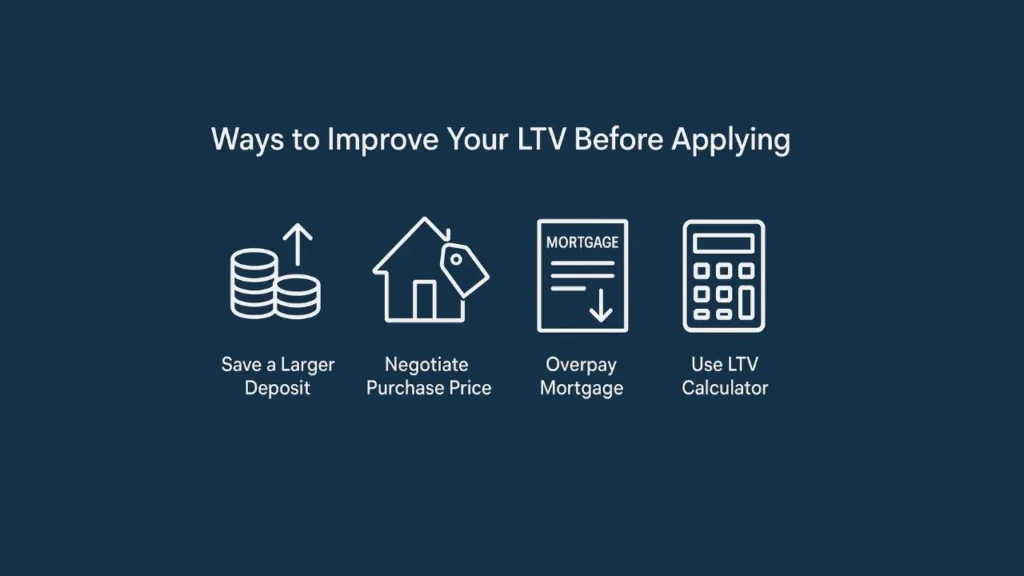
Saving for a larger deposit
Increasing your deposit is the most effective way to improve your LTV ratio. The UK average first-time buyer deposit stands at about 20%. Putting down a larger sum immediately reduces your LTV percentage—with lower LTVs of 75%, 60% or below typically unlocking the most competitive interest rates. Consider opening a Lifetime ISA (LISA) if you’re under 40, as the government adds a 25% bonus to your savings.
Negotiating a lower purchase price
Securing a reduced purchase price instantly improves your LTV position. Use property surveys as leverage if issues are identified. Even a modest price reduction shifts your LTV favorably—for example, negotiating £2,000 off a £100,000 property with a 90% mortgage would reduce your loan to £88,200 instead of £90,000.
Overpaying your mortgage to reduce balance
For existing homeowners looking to remortgage, making mortgage overpayments offers substantial LTV benefits. Most lenders permit overpayments of up to 10% annually on fixed rates without early repayment charges. Even modest monthly overpayments of £50 could save £5,807 in interest and reduce your term by 18 months.
Using a remortgage LTV calculator to reassess
Regularly reassessing your LTV position helps identify remortgaging opportunities. Online remortgage calculators provide quick visibility into how property value changes and mortgage payments affect your current LTV. These tools are especially valuable when property values increase, potentially qualifying you for better rates.
FAQs
To calculate your LTV, divide your mortgage amount by the property’s value and multiply by 100.
Example: Borrowing £160,000 on a £200,000 home → (160,000 ÷ 200,000) × 100 = 80% LTV.
An LTV of 80% or lower is generally good. The most competitive interest rates are usually available at 75% or lower, with the very best deals often reserved for 60% LTV or below.
Your LTV directly impacts the rates and terms you’re offered.
- Lower LTV (≤ 75%): Better interest rates, more choice, and flexible terms.
- Higher LTV (≥ 90%): Fewer lenders, higher rates, and stricter affordability checks.
Yes. Strategic upgrades like adding an extra bedroom, bathroom, or a modern kitchen can raise your property’s market value. This increase lowers your LTV and may unlock cheaper remortgage options.
Yes, some lenders and government-backed schemes offer 95% mortgages. However, they usually come with higher interest rates and stricter affordability checks.
- Buy-to-let: Typically capped at 75% LTV (some stretch to 80–85%).
- Commercial/mixed-use: Usually between 65% and 75% LTV, depending on the lender.
Yes. As you repay your mortgage or if your property value rises, your LTV ratio improves. This can help you qualify for better remortgage deals in the future.